“Uncle Bill”
by Chris Watson
Name of interviewee: Uncle Bill
State of interview: Louisiana
Place of enslavement (there may be more than one): Louisiana
‘Occupation’: Field
Crop produced on slaveholding unit: Cane
Name of interviewer: Jeanne Arguedas
Race of interviewer: White
Is this included in Rawick’s supplement series?: No
Is there evidence of editing: No
Jeanne Arguedas was not a typical interviewer. Indeed, even when the subject of the interview was themself atypical, Arguedas’ approach to drawing information from her subject was rather unique.
Arguedas had a colourful background. Growing up the daughter of a sugar merchant and frequent visitor to her grandparents’ plantation, she was accustomed to being around enslaved people.[i] It is this privileged upbringing that perhaps shaped the way in which Arguedas framed her interviews for the Louisiana Writers’ Project. Enslavers would demand deference from enslaved people not just to themselves, but also to their children, showing the supposed power and authority a white person, and even their children, possessed.[ii] It is against this backdrop that we must consider the subject of Arguedas’ interviews.
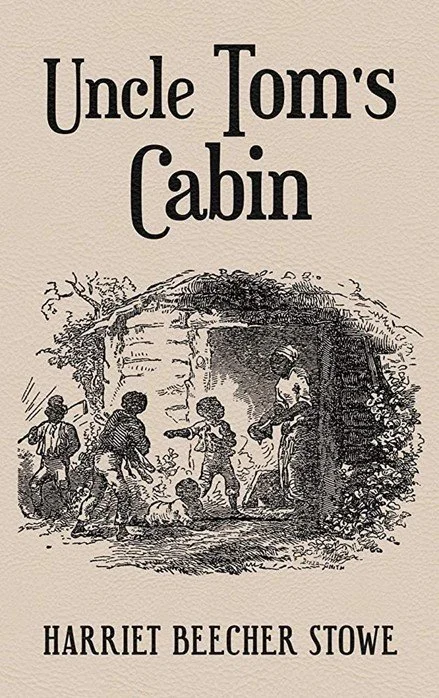
Simply referred to as Uncle Bill, the very way in which the interviewee is introduced shows how deeply the language of slavery was rooted in society. The use of an epithet such as ‘uncle’ can be linked to works of literature, such as Uncle Tom’s Cabin by Harriet Beecher Stowe. In this novel, the name Uncle Tom is an insult directed towards a black person seen as subservient to whites, or even complicit with oppressive measures put in place by white people.[iii] From the very start of the interview with Bill, Arguedas places her interaction with a formerly enslaved person purely within the confines of slavery, reducing an individual to their pre-emancipation state. When attempting to offer a reason for retaining Bill’s epithet, Arguedas states that he was known ‘to everyone’ by this name. What is unclear about this point is whether ‘everyone’ is literal, or whether it solely relates to enslavers and other white people more broadly.[iv]
Perhaps the most striking aspect of Bill’s interview is how little of his own voice we hear in the text. The bulk of the text is made up of Arguedas describing Bill’s home, and his capacity for hard labour in the cane fields, a colourless felt hat perched on his head to protect him from the sun. It is only when Bill recounts a remarkable account concerning his encounter with Union soldiers that Arguedas allows him to tell his own story. While it has been noted that the contrast between enslaved black southerner and white Unionist soldier was pronounced, Bill was the recipient of what could ostensibly be described as friendly fire.[v] The fact that the Commanding General of the Union Army, Ulysses S Grant, was happy for his men to follow a policy of scorched-earth when necessary, could perhaps explain how Bill ended up suffering a gunshot wound from a Union soldier.[vi] Grant’s men seemingly cared little about who was caught up in this destructive tactic; civilians, enslaved people, or enemy troops.[vii] Acceptance of assistance from black people was often based purely on necessity, rather than Union troops necessarily possessing progressive attitudes towards race, with Grant’s troops generally holding racist views.[viii] That a person who had grown up enjoying the spoils of slavery would only allow her interviewee to tell a tale that portrays Union troops in a negative light is rather revealing.
If limiting Bill’s own voice in an interview conducted with him is surprising, then it is at least consistent with others carried out by Arguedas. An interview with a nightwatchman on a plantation, John Care, contains one five-word quote from the subject, with the rest of the piece concerning itself with Care’s character and demeanour, all given from Arguedas’ point of view.[ix]
Within Bill’s limited space to tell his own story is yet another attempt by Arguedas to return him to his erstwhile position of enslaved. This is done via the way in which Arguedas records Bill’s dialect. Sterling A Brown had published a document that addressed the way in which interviews with formerly enslaved people had used dialect in different ways. Brown’s work covered the period between 1936 and 1940, approximately the time that Arguedas was interviewing Bill. Noting that ‘truth to idiom is more important, I believe, than truth to pronunciation’, Brown still allowed for words with a definite difference of pronunciation to be recorded as heard.[x] To give one example of how Arguedas’ approach ran counter to Brown’s suggestions, she records Bill referring to his ‘massa’.[xi] Brown wished for a more uniform way of expressing the interviews of the formerly enslaved, to allow readers to avoid ‘pages sprinkled with misspellings, commas and apostrophes’.[xii] From this it would appear that Brown is more concerned with syntax than any kind of progressive altruism. Yet Brown’s wish for racist words to be omitted certainly does show a desire to move away from the type of language that was synonymous with the period of slavery.[xiii]
Arguedas’ way of recording her interviews with the formerly enslaved allows for a story of limited scope to be told. Other interviewers, like Flossie McElwee, gave their subjects space to tell their own experience of slavery, without ‘excessive editorialising and ‘artistic’ introductions’.[xiv] Arguedas does not even provide basic biographical information on her interviewee. Reading between the lines we can guess that Bill would have been over 80, based on the year the interview was conducted and his near fatal encounter with Union troops during the American Civil War. What we get from Arguedas’ interview with Bill is a brief profile created by somebody who perhaps lacks impartiality when interacting with the formerly enslaved. Her continued use of the ‘uncle’ title shows this to be the case. In spite of this, Arguedas does tell us of a song that Bill would sing while toiling in the fields, albeit in colloquial language, which must have resonated with her time spent as a child on her grandparents’ plantation, learning songs in French and ‘Creole’ (kouri vini).[xv]
We are offered the merest glimpse into Bill’s life from his interview. We know that he had worked for many years in the cane fields, and that he had survived a near-death meeting with Union soldiers, but this is all that Arguedas permits us. The limitations that she places on Bill’s voice prevent a more thorough biographical picture from being created. As frustrating as this may be, it could perhaps be enough to whet the appetite, and encourage those interested to investigate other work on slavery in America, such as Joe Gray Taylor’s Negro Slavery in Louisiana, which fleshes out the enslaved-enslaver relationship.[xvi] If this is to be the case, then even the rather limited nature of Bill’s interview retains great importance.
Bibliography
Louisiana Writes’ Project Interviews
Ballard, Michael and Cheathem, Mark (eds.). Of Times and Race: Essays Inspired by John F. Marszalek, (Mississippi: University Press of Mississippi, 2012)
Brown, Sterling A. Notes by an Editor on Dialect Usage in Accounts by Interviews with Ex-slaves, 1936-40
Everett, Donald E. ‘Negro Slavery in Louisiana by Joe Gray Taylor’ (Baton Rouge: Louisiana Historical Association, 1963), Journal of American History, (50:2, September 1963), pp. 307-308
Jones-Rogers, Stephanie E. They Were Her Property: White Women as Slave Owners in the American South, (Yale: Yale University Press, 2019)
Musher, Sharon Ann. ‘"The Way the Almighty Wants It": Crafting Memories of Ex-Slaves in the Slave Narrative Collection’, American Quarterly, (53:1, March 2001), pp. 1-31
Uncle Tom’s Cabin, via https://www.britannica.com/topic/Uncle-Toms-Cabin/Major-themes-and-influences#ref1254140, last accessed 15/3/2023
[i] Introduction to Jeanne Arguedas, in A. Livesey, Slavery in Louisiana, Baton Rouge: Louisiana State University Press [forthcoming], p. 189
[ii] Stephanie E Jones-Rogers, They Were Her Property: White Women as Slave Owners in the American South, (Yale: Yale University Press, 2019), p. 5
[iii] Uncle Tom’s Cabin, via https://www.britannica.com/topic/Uncle-Toms-Cabin/Major-themes-and-influences#ref1254140, last accessed 15/3/2023
[iv] Interview with Uncle Bill conducted by Jeanne Arguedas, in A. Livesey, Slavery in Louisiana, (Baton Rouge: Louisiana State University Press [forthcoming]), p. 190
[v] Michael Ballard, ‘Union Soldiers React to Slaves, Slavery, Freedmen, and Colored US Troops during the Vicksburg Campaign’ in Michael Ballard and Mark Cheathem, Of Times and Race: Essays Inspired by John F. Marszalek, (Mississippi: University Press of Mississippi, 2012), p. 71
[vi] Ballard, ‘Union Soldiers React’, p. 78, and Interview with Uncle Bill, p. 191
[vii] Ballard, ‘Union Soldiers React’, p. 78
[viii] Ballard, ‘Union Soldiers React’, p. 86
[ix] Interview with Celie Cressy conducted by Jeanne Arguedas, in A. Livesey, Slavery in Louisiana, (Baton Rouge: Louisiana State University Press [forthcoming]), p. 192
[x] Sterling A Brown, Notes by an Editor on Dialect Usage in Accounts by Interviews with Ex-slaves, 1936-40, p. 1
[xi] Interview with Uncle Bill, p. 191
[xii] Brown, Notes by an Editor, p. 1
[xiii] Brown, Notes by an Editor, p. 1
[xiv] Interviews with Flossie McElwee conducted by Jeanne Arguedas, in A. Livesey, Slavery in Louisiana, (Baton Rouge: Louisiana State University Press [forthcoming]), pp. 148-188, and Brown, Notes by an Editor, p. 2
[xv] Introduction to Jeanne Arguedas, p.189
[xvi] Donald E. Everett, ‘Negro Slavery in Louisiana by Joe Gray Taylor’ (Baton Rouge: Louisiana Historical Association, 1963), Journal of American History, (50:2, September 1963), p. 307