Fannie Moore
By Kieran Brussels
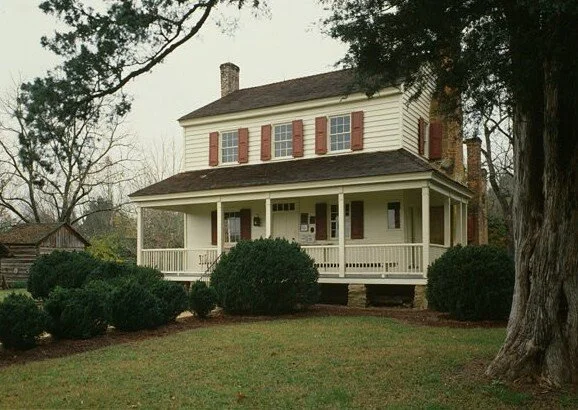
Fannie Moore was born in 1849 and raised on the Walnut Grove Plantation in the Spartanburg County town of Roebuck. The plantation was originally owned by immigrants who came from Ulster in Ireland called Charles and Mary Moore. It was built between 1763 and 1765 with the help of a dozen slaves. Fannie claims in the interview that the plantation was the “biggest plantation in de whole country”. Records show that with an original grant 550 acres, Charles Moore slowly built and expanded his plantation over the year bringing his total acreage to around 3,000. When compared to the average plantation size of 1,000 acres, it is clear to see this will have been one of the biggest, but due to their lack of records it is not possible to tell how many enslaved people lived on the plantation at any one given time.
A challenge of working with WPA testimony is the amount of time passed between slavery and the actual interviews. This became especially apparent when researching into fannies life and the story she gives. Throughout the interview she talks of her enslaver “Marse Jim”, however upon further research, no master Jim ever owned Walnut grove plantation. The plantation was originally owned by Charles Moore, who in turn passed it down to his son Dr Andrew Barry Moore, who then passed it down to his sons Thomas and Andrew upon his death the year before Fannie. The only link to a possible Jim on the plantation was Thomas Moore’s grandfather in law who was named James Mason Anderson also known under the nickname ‘Tyger Jim’ due to his location of residence on the Tyger river which ran through the plantation. Perhaps this Jim visited the plantation over the years. Although inconsistencies in Fannies story present problems upon further research of the lives lead at the plantation, I do not think (as many historians have argued) that this takes away or devaluates the nature of the interview. For all enslaved people these will have been the most horrific and torturous times in their lives with many wanting to forget about the events that took place. Perhaps why some information is blurry to them. However, it is important as historians and as human beings that we listen to these forgotten tales as a show of respect and let their voices live on.
Marjorie Jones was the interviewer for this specific interview and interestingly to note she was white. A white woman entering a formerly enslaved woman’s home and asking questions about slavery is bound to cause a lot of issues. However, without access to the supplement series, it is hard for me to identify any editing. I will say that it is most likely the interview was manipulated in some way or form and if anything, it adds more to the inconsistency of the interview than Fannies faded memory may have.
Fannies story stood out to me due to its inspiring tone and the way she and her family always saw a light at the end of the tunnel, with tales of singing, dancing, and most importantly defiance. Life on the plantation was unpleasant from birth and she details her life as a young child helping her mother to complete jobs all through the night by holding a light next to her, resulting in scars that lead down her arm, so she could complete the four cuts of thread expected for the white folks every day. Her mother (Rachael Moore) worked on the fields all day and quilted all night, her father (Stephen Moore) was a talented blacksmith who shoed all the horses on the plantation and according to Fannie was popular with the enslaver at the time. This of course didn’t make their life any easier. Confined to the slave quarters which she describes as long cabins covered in dirt. Conditions not fit for a human being to live in. Their state of living only reflected the way their enslavers viewed them. If you visit the plantation today, you can visit two grave sites. One full of luxurious gravestones that belong to the enslavers and the other a field covered in fist sized rocks to mark the graves of enslaved families. Even after death reflecting the value the Moore family put on their enslaved workers lives.
One interesting story Fannie tells is a confrontation between her mother and the master’s mother Nancy Miller Montgomery Evans. The story goes that after being caught singing in the field, Nancy confronted her mother in a blazing row which in return her mother defiantly grinned and said “de lawd done tell me I’s saved… An some day we nevah be slaves”. Without hesitation the old woman grabbed a cowhide and struck Fannies mother across the back and without flinching strolled back to the field singing at the top of her lungs. This tale especially stood out to me due to its inspiring nature and shows the defiance these enslaved people had even through everything they had to endure throughout their lives. Perhaps why her parents lived to the ripe ages of 104 and 105.
Upon looking into Fannies life, I found it near impossible to find any records relating to her. Even when coming across a potential lead of her family including her mother and father and ten out of the twelve siblings she mentions in the interview, her name is nowhere to be seen. The closest I found to a possible lead was a record of an 1860 slave schedule. On the record it details a black female aged 11 who was born in 1849, lived in Spartanburg and was owned by ‘A.C. Moore’ who I suggest is likely Andrew Charles Moore, one of the enslavers she speaks of in her interview. One aim of the blogpost was to track the life of Fannie but with lack of records after 1860, I felt I had failed to do this until I contacted a descendant of hers who explained that Fannie moved to north Carolina and married a Matt Walters, starting a new life away from the history of Walnut grove and now has a long line of family members who carry on her name and legacy.
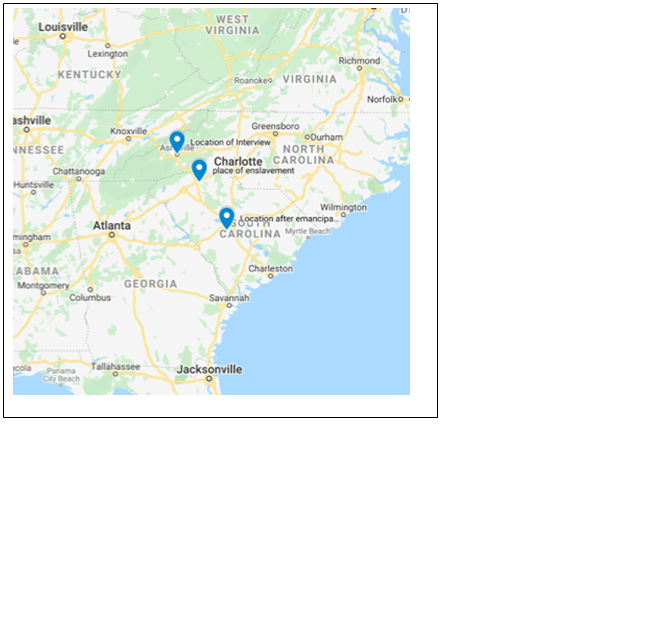
Map showing Fannie’s life
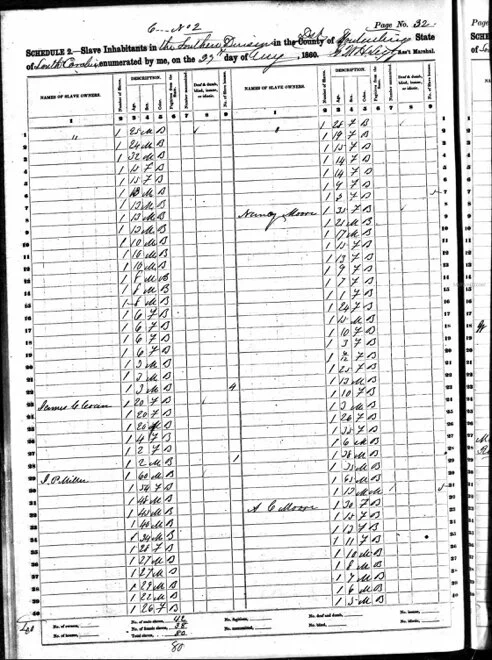
Document showing 11-year-old black girl born in 1849
Links to potential leads
http://www.spartanburghistory.org/walnut-grove-plantation
https://www.facebook.com/African-American-surname-Moore-from-Spartanburg-South-Carolina-966097453504345/