Elisabeth Sparks
by Leah Rose
Name of interviewee: Elisabeth Sparks
Age at emancipation: Approx. 22
’Race’: ‘mulatto’or black’
Year of interview: January 13, 1937
Place of interview: Matthews Court House
State of interview: Virginia
Place of enslavement (there may be more than one): Mathews County, Virginia
Address of interviewee (if given): Unknown
‘Occupation’: Domestic
‘Occupation’ of mother: Domestic
‘Occupation’ of father: Unknown
Size of slaveholding unit: Unknown
Name of enslaver (there may be more than one): Jennie Brown and Shep Miller
Name of plantation/farm: Seaford, Mathews County
Crop produced on slaveholding unit: Wheat and other crops
Name of interviewer: Claude W. Anderson
Race of interviewer: Black
Is this included in Rawick’s supplement series?: No
Is there evidence of editing: No
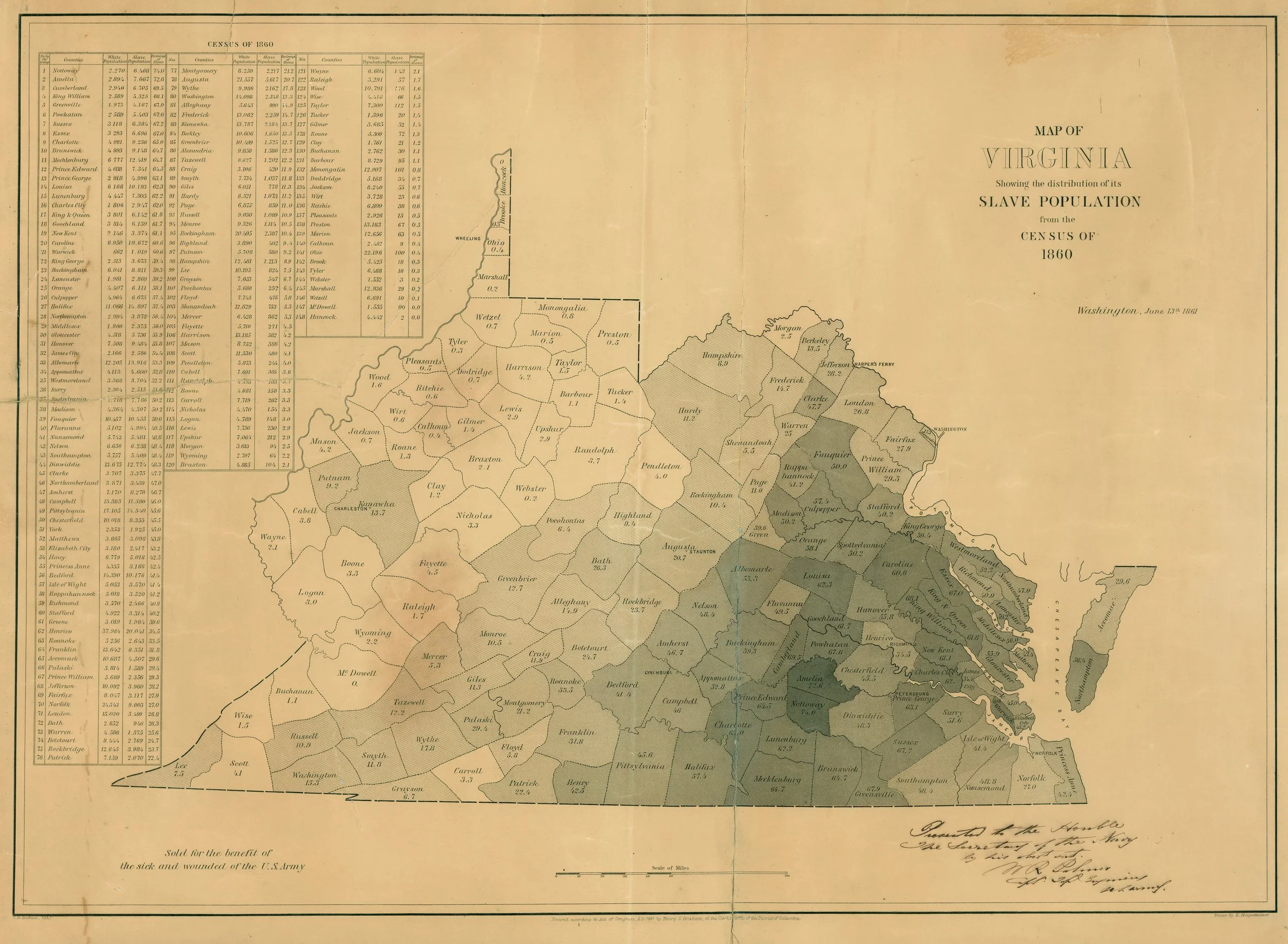
Elisabeth Sparks interview conducted by Claude W. Anderson provides an informative and valuable insight into slavery as an institution. Spark’s account of her time within the institution portrays violent acts of her enslavers upon herself and her family. She often depicts the violent acts in a casual manner suggesting how poorly the enslaved people were treated day by day on the plantation where she resided.

Sparks recalls her time at the plantation called Seaford in Mathews County, Virginia. Seaford was owned by Jennie Brown and Shep Miller who were married at around the time Sparks was age fifteen or sixteen in which she was a wedding gift to her enslaver Jennie Brown. Sparks speaks casually on the violence inflicted by Jennie Brown and calls her ‘a good woman’ after informing Anderson that she had died around the year 1933, four years prior to this interview. The nature in which this violence is spoken about implies just how awfully Shep Miller treated the enslaved people on his plantation being described as ‘terrible’ by Sparks. Sparks appears to be very comfortable speaking about the violence at Seaford, this could be due to her interviewer being African American himself and therefore feeling more at ease to speak about her past. Despite this Sparks still expresses immense fear that Shep Miller may come back to haunt her if she shares too much about her time on the plantation as he had died before the interview had taken place. It is also indicated that Anderson is African American as Sparks ends her interview by saying ‘keep lookin’ good an’ come again’ which is a significantly different response to being interviewed in comparison to other WPA interviews conducted by white people.
Whilst speaking about her time at Seaford, Sparks also mentions other individuals who were at the plantation including ‘Aunt Caroline’ and ‘Betty Lilly’. Alongside this she speaks of her marriage to John Sparks when she was nineteen in 1861. Her marriage was a broom jumping marriage seen as a common religious ritual it is also a common wedding ceremony shown throughout the WPA interviews. John Sparks was on a neighboring plantation to Elisabeth Sparks ran by a bachelor by the name of Williams. Cross plantation marriages were common and encouraged by the enslavers to create connections between plantations and to increase their personal wealth when the enslaved people had children. This is also made clear by Sparks recalling that she had to ask permission from Jennie Brown and from this account it appears there was no hesitation from Brown to allow the marriage to John Sparks.
Elisabeth and John Sparks had had their oldest son in 1862 a year after their marriage, shown in records as a Wm H Sparks. It is believed that together they had six children and John Sparks stayed on the plantation next to Elisabeth Spark's until emancipation. Alongside her own children Sparks recalls having five brothers and five sisters, however not naming any of them or her parents. Sparks tells Anderson that her mother had a domestic role in the house, as did she, and that she passed away at the age of seventy-four twenty years after her enslaver died. Shep Miller was originally at Springdale plantation, Virginia, before he married Jennie Brown. Brown was also at a different house before marrying where Sparks mother worked in the household furthermore, Sparks recalls her mother telling her about having to wash the white enslavers clothes until late into the night.
Shep Miller served in the civil war, but it is recalled by Sparks that ‘Shep went to war but not for long’. She talks of the fall of Richmond in 1865 very briefly, it is possible that this was the part of the war that Miller was involved in, therefore, being significant to Sparks. Sparks shares that after the civil war many of the enslaved people in Seaford were sent to South Carolina, including an enslaved man Sparks calls her ‘Cousin James’. Sparks was offered some of Jennie Brown’s belongings by North Americans that had come to the Antebellum south to offer freedom to the enslaved people after the civil war. However, Sparks refused and wanted to stay in Virginia. Sparks husband wanted to stay with her and their family so faked an injury and limped to avoid being moved away to South Carolina this portrays the resilience and strength of John Sparks.
Through the record of a death certificate, it is possible that Elisabeth Sparks was also known by the name Eliza Sparks which informs that her parents were named Fannie White and Henry White. The death certificate shows that Sparks passed away at the age of ninety-eight on the 18th of September 1940 in Mathews County, Virginia. As this WPA interview took place at Mathews Court House it is suggested that Sparks spent her entire life in Mathews County, Virginia. Although no address can be found for where Sparks resided after emancipation by using online maps the distance between the Seaford plantation and the courthouse is only around 2.9 miles. In her interview Sparks never expresses the urge to leave Virginia, as previously understood, she had her family with her and did not want to leave Jennie Brown at the first opportunity she was given after the war. Sparks comments on freedom from the slavery institution alongside the feeling of fear expressing that all enslaved people wanted freedom, but they could never ask the white enslavers as they felt too scared to do so not knowing how the enslavers would treat them if denied freedom.
Aside from this interview, there is no other information about Elisabeth Sparks life after emancipation as she only speaks about her time at the plantation and the information she was given about her mother’s experience and her husband's time on the neighboring plantation. Sparks speaks on her religion mentioning the bible at the end of her interview and within the body of it she recalls having to ask permission to attend church in which there was a morning and evening service that was attended by both white enslavers and enslaved people who were made to sit in the back of the church.
Bibliography -
Charles L. Perdue, Robert K. Phillips, Thomas E. Barden, Weevils in the Wheat. University Press of Virginia, 1992.
Family Search https://www.familysearch.org/ark:/61903/1:1:QVY2-PR1T?lang=en [Date Accessed: 20/3/25]
Library of Congress, Born in Slavery, Digital Collection https://www.loc.gov/collections/
Norfolk Public Library http://smcdigital.norfolkpubliclibrary.org/ [Date Accessed: 4/2/25]
Realtor.com https://www.realtor.com/realestateandhomes-detail/567-Seaford-Ln_Mathews_VA_23109_M59771-51047 [Date Accessed: 20/3/25]
Virginia.gov https://edu.lva.virginia.gov/dbva/files/original/a3e5113726c3ec5372401c2a85563934.jpg [Date Accessed: 20/3/25]
Wikipedia Images https://upload.wikimedia.org/wikipedia/commons/d/db/Springdale1735.JPG [Date Accessed 20/3/25]
