Minnie Fulkes by Lynn Lundy
Year of interview: 1937
Place of interview: Petersburg
State of interview: Virginia
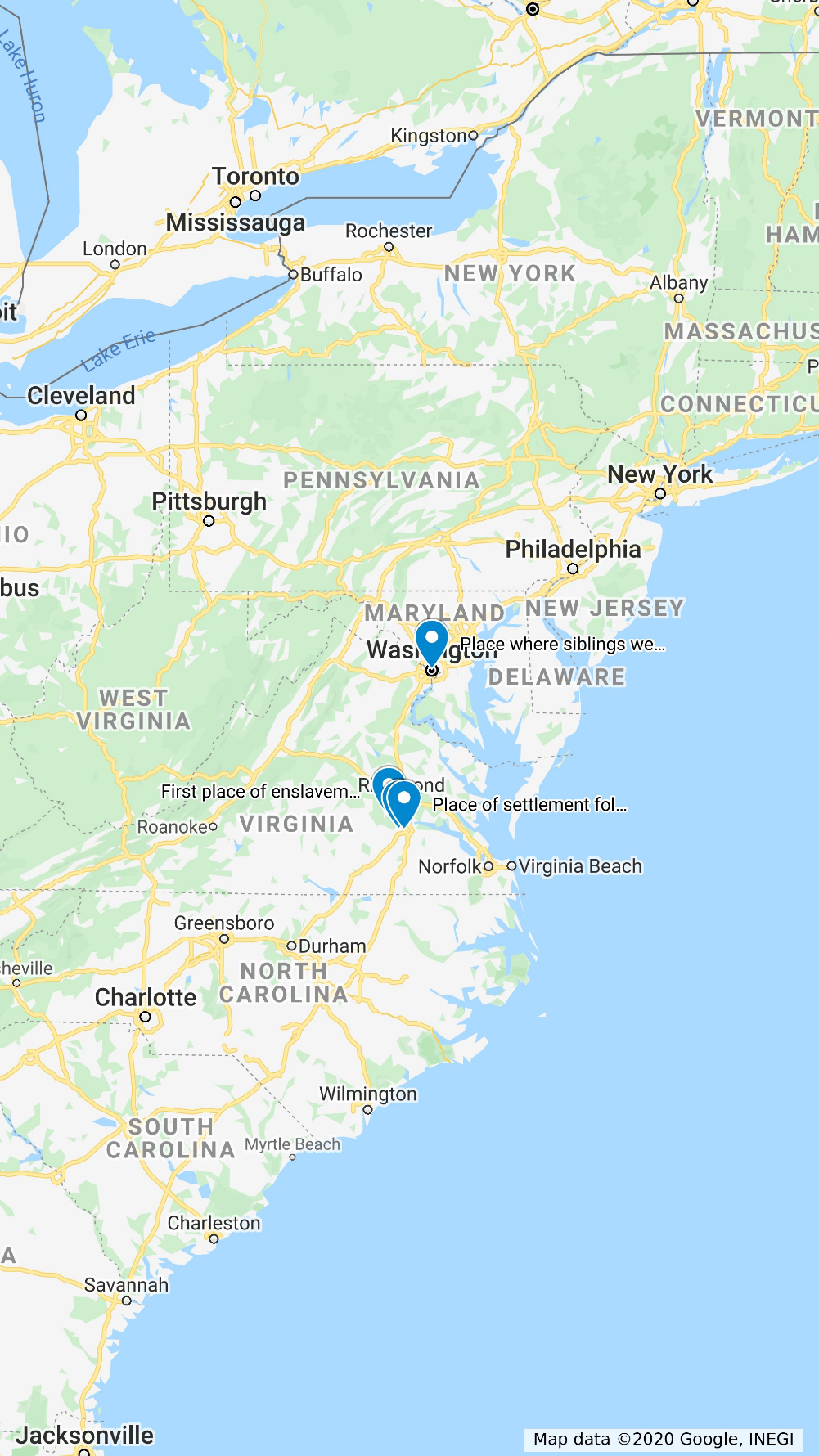
Place of enslavement : Chesterfield County
Address of interviewee:l 459E Byrne Street, Petersburg, Virginia
‘Occupation’: Domestic
‘Occupation’ of mother: Domestic
‘Occupation’ of father: Unknown
Size of slaveholding unit: First slaveholding unit was small but the second slaveholding unit was large
Name of enslaver : Dick Belcher, then Gallespie Graves
Name of interviewer: Susie Byrd
Race of interviewer: Black
Is there evidence of editing: no
Minnie Fulkes (hereby referred to as Fowlkes, as documented on her death certificate ) was interviewed by Susie Byrd on March 5 1937 as part of the Works Projects Administration (WPA) research project into understanding the lives of the formerly enslaved in the southern states of America. There were a number of interviewers involved in the project who interviewed thousands of the formerly enslaved.
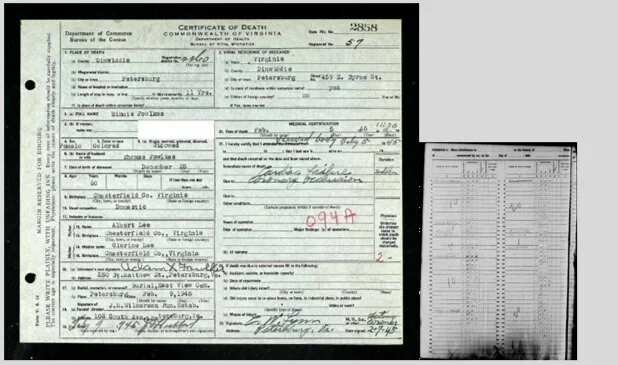
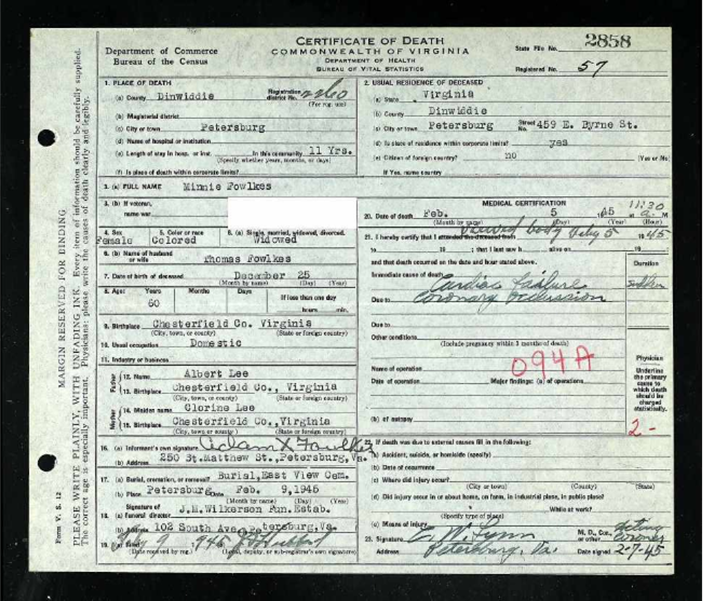
Fowlkes reveals some detailed information, whilst other areas of the interview require further investigation in order to fully understand her life under slavery. Byrd records Fowlkes’ name as ‘Minnie Fulkes,’ yet initial searches under this name did not provide any definitive information. Exploring alternative spellings, however, provided significant information to corroborate the detail within the interview and allowed further research into her life, her enslavers, and living conditions. Fowlkes’ death certificate verified her identity from her address details and birthday, which she had declared during the interview. It also confirms that she had been married, but her husband, Thomas Fowlkes, had passed away.
Fowlkes informed Byrd that she had been enslaved by Dick Belcher (Richard Belcher) in Chesterfield County, before being sold to ‘Galaspe Graves’ (hereby known as Gillespie Graves ) and it is from these records that we are able to retrieve more detailed accounts of the life of Fowlkes and able to confirm elements disclosed in her interview.
Dick Belcher can be found in the census records of Chesterfield County in 1880 . These records provide details of the household of Belcher. He is listed as a farmer and has a ten year old mulatto girl by the name of Dolly Woody living with him as a servant. He also lives with his wife and son and his mother in law. It is of interest to note that his mother-in-law’s name is Elizabeth Graves, the family name of the person Fowlkes and her family were sold to. This could indicate that the Fowlkes family were part of an inheritance following a death in the family or the closure of the Belcher plantation. Whilst it is clear that Belcher was an enslaver, records only declare Woody and the Fowlkes family as listed for him. However, in Fowlkes’ interview, she states that she is one of fifteen children so her mother could have been forced to have children to ensure that there were slaves for the future. Her mother was also beaten for “not agreeing to marry the master,” but it is more plausible that she had declined any sexual advances, as marriage between the formerly enslaved and their enslavers were illegal. As there is an indication of sexual violence, it is possible that some of the children were fathered by one of the white men from the plantation, and could be why the family were never separated.
It is not clear when Fowlkes was sold or moved to the Graves plantation, but records indicate that Graves held more slaves than Belcher, with both census records and slave documents detailing the names of many different slaves over a number of years.
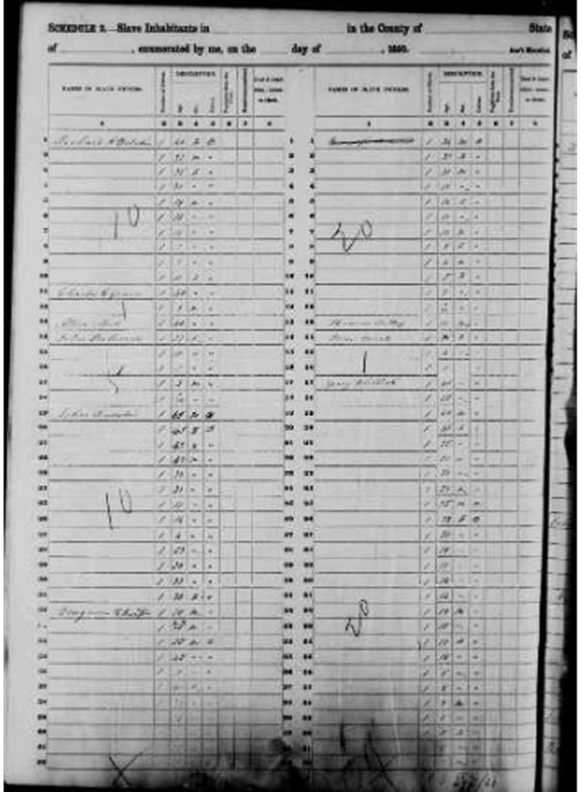
There are many records showing that Graves bought slaves over a number of years, including this slave schedule of 1850. There are also records showing Elizabeth Godsey in 1860 and Fowlkes talks about Godsey being a ‘mistress,’ yet she is listed as black in the census. Therefore, she is likely to be a domestic for the family in the main house and could appear to be a hierarchical figure to the other people enslaved on the plantation. Whilst she commanded a position of authority, she holds a value on the census records of $600, confirming her enslaved status.
Records of Graves did not only provide details of those he enslaved, but also details of his military records. He fought for the Confederate Army from 1861 to 1865, which highlights his beliefs that owning people as slaves was acceptable. Fowlkes refers to the period when emancipation was granted and informs Byrd that Graves did not inform any of his slaves that they were free to leave for over a month, in an attempt to ensure they would remain with him for longer. She also informs us that the family remained with Graves as they did not know where else to go and they were recompensed with food and shelter. Fowlkes did not like this situation but felt that her parents were left with no option but to stay. It is likely that they would have been coerced into staying in an act of control from Graves.
Fowlkes speaks negatively of the period when she and her family was enslaved and describes some very difficult situations in a lot of detail, yet was grateful that the family were able to remain together as she was aware that many families had been separated. The information she provided allows an insight into the often horrendous conditions faced by the formerly enslaved.

Bibliography:
Familysearch.org
Library of Congress Digital Collections: https://www.loc.gov/collections/
Unites States Census Bureau: www.census.gov
WPA Interviews: http://www.gutenberg.org/ebooks/author/3906